 20/11/2024. Orokonui / Wrights Road. Grade 3. Hikers. Leaders: Jay Devlin and Pam Clough.
On 20/11/24 21 hikers gathered at the Orokonui Sanctuary carpark.
Taieri Recreational Tramping Club
Mid-week recreational and social walking group based in Mosgiel NZ
Post linked to Info Post
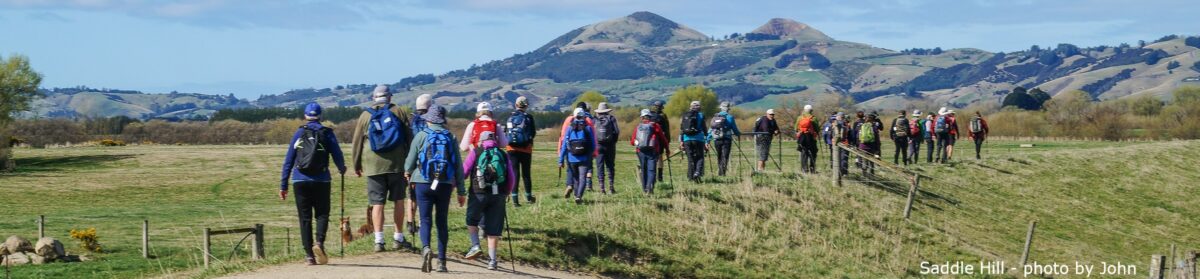
20/11/2024. Orokonui / Wrights Road. Grade 3. Hikers. Leaders: Jay Devlin and Pam Clough.
On 20/11/24 21 hikers gathered at the Orokonui Sanctuary carpark.
 18/11/2024 Track Clearing. Leader: Phil Keene
The 2024/25 track clearing got off to a great start on 18 November with 8 highly skilled workers turning up for a work out
 13/11/2024 Outram Glen to Lee Stream. Grade 2. Hikers. Leaders: Julie McKenzie & Katrina McKenzie.
On a cloudless morning 25 happy hikers met at the Outram Glen carpark.
 13/11/2024. Chingford Park, Cleghorn Street, Opoho Circuit. Grade 4. Trampers. Leaders: Ross and Wyn Davies.
20 trampers met up up North Road in North East Valley, on the corner of Crown Street. We headed off at about 9:45am up the valley in sunshine.
Continue reading “Chingford Park, Cleghorn Street, Opoho Circuit”
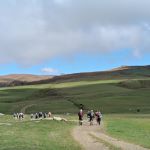 06/11/2024. Deep Creek Weir. Grade 3. Combined. Leaders: Barbara Shackell, Wendy Langley, Carolyn Pridham, Sue Johnstone.
28 set off in absolute perfect weather, past Rocklands Station on the Old Dunstan Road, until reaching the Te Papanui gate.
November 2024 update
The year marches on far too quickly and Xmas will be here before we know it, which means we would have been to the USA and Costa Rica and be back home!
Welcome
to Jill Thomas, Martin and Robyn Hickley, Rhonda Wilson and Peter Beal – we have enjoyed walking and talking with you.
Committee deliberations and follow ups
– As part of the ongoing ‘upgrade’ of web information, the upcoming trip programme will indicate a ‘P’ for permission required. Access to the details of private landowners are to be requested from either John Gardiner (trampers) or Wendy Langley (hikers). Details of access to private land is a courtesy from the landowner and the information is to be used solely for the purposes of organising club trips.
– Both the trampers and hikers bags that hold the emergency locator beacon for each group now also have tape, gauze and a splint to assist with managing minor wrist damage.
– Please note that the trip leader / tail end charlie must carry the beacon at all times, so for instance it is not appropriate to leave it behind inside a pack on the ground whilst everyone heads to a point of interest.
– The club uses three locator beacons, the trampers and hikers as mentioned and a third held by Phil K that is used mainly for the track clearing days. It was also to be used for recces where a plb is required. After discussion should a club plb be required, it was agreed that this third plb should be the one used for recces.
– We identified a gap in our procedures as recces are not listed on the trip programme. Where this plb – or either the trampers or hikers plb, if in your possession as leader for a walk the following week – is used a text or email to Clive Crossman 021866410/[email protected] needs to be done to advise him where you will be. If the plb is turned on our contact point can to the authorities when they call that a group/ someone is in that vicinity. Phil will also leave the 3rd plb with Clive (who resides at 15 Calluna Crescent, Heathfield, Mosgiel) when he is away from home. Thank you Clive for this support.
At the combined walk to Deep Creek Weir, John and Wendy provided a demonstration and chat on the use of plbs and how the process works.
– John Gardiner and Wendy Langley agreed to be the trip coordinators for the trampers and hikers respectively, and subsequently led the development of the summer trip programme now published. Any changes to the trip programme should be discussed with either as this helps to keep the left and right hand in sync. Many thanks to everyone for your trip suggestions, especially Spen and Jane who have enlarged our store of walks considerably.
– Barbara Shackell will be the social convenor (assisted by Jenni Wright and Raewyn Keene) and note 11 December for the Xmas walk and lunch at Takitakitoa Wetland and Momona Hall.
– As time moves on ‘things have changed’ as Bob Dylan sang, so Phil will edit the trip guidelines to reflect those and have this ready for the next Committee meeting in the new year.
– Ross Davies redid the fuel calculations and a revised cost per km was agreed to be reflected in the summer programme. A reminder that where a recce is done for a trip that has a fee per passenger of $10 or more then the driver can claim three times that fee for the recce. An email to the secretary confirming the recce was done and the date is sufficient to initiate payment.
– It was agreed that the webteam would send the pre-trip note to leaders requesting details of the nominated trip about three weeks in advance of the actual date. This helps get the final details of the trip identified and confirmed and aligned with the upcoming programme. If you find five minutes at some time have a read Trip Leaders and the Webteam
– When trip leaders submit the trip information for trips ‘over the hill’ in town or North of town or on the Peninsula to the web team for inclusion in the weekly update they need to be aware of and include the practice of where those who live in the City should meet.
City trampers meet
at Bayfield Park if the walk is on the Peninsula
at the Otago Yacht Club if the walk is down West Harbour
at Malvern Street, Woodhaugh if the walk is north over the Northern Motorway.
In these cases there is a $5.00 ‘discount’ from the passenger fee ex Peter Johnstone Park. Approximate the meeting time at these places should be no later than 20 minutes from the Peter Johnstone departure time.
Please also make sure in your notice that where to park cars at the start of a walk is clear and precise.
– As mentioned, our trip guidelines will be revised in the New Year. They do and will require that recces need to be undertaken. We do not want to be too prescriptive about the ‘how’ these are done but as a minimum access/bifurcations (forks in the road or track) need to be checked and assessed and be sufficient to ensure leaders are conscious of walkers needs on the day. Relying on memory is risky as the weather conditions could be different as well as the landscape has changed since you last undertook the walk.
– To let you know that Neville Griffiths has recently been inducted into the JP hall of fame. Anyone requiring of JP services feel free to contact Neville, he can bring his stamps along on a walk!
– thanks to those who have volunteered/apologised for our first track clearing day on Monday 18th Nov. We have a high-quality team and there will be more opportunities to assist in the New Year!
Wishing everyone all the best for the festive season and keep up that walking to offset the increased calorie intake. Note our first walk in 2025 is 15 January.
Cheers
Phil
Link to President’s Update information Library for previous updates
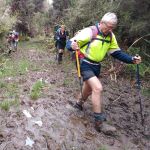 30/10/2024. Greengage Track. Grade 5. Trampers. Leaders: Graeme Souter and Graham Thurlow.
Bah humbug how hard can this grade 5 tramp be? Heh heh they were about to find out as those who did the recce already knew what to expect.
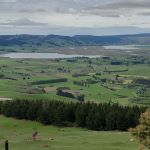 30/10/2024. 3 Kings from Heenan Road. Grade 3 Hikers. Leaders Dave Roberts Neville Griffiths.
On a chilly calm Morning 18 hikers set off from Mosgiel at 9am to pick up one hiker at Outram
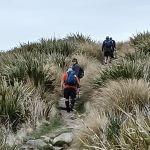 23/10/2024. Flagstaff, Bull Ring. Grade 2.5. Hikers. Leaders: Theresa White, Julie MacKenzie.
19 hikers left P/J car park with a warning of 23 degrees, so take plenty of water. Fortunately for us there was a breeze that got stronger, and the heat was manageable. Continue reading “Flagstaff, Bull Ring”
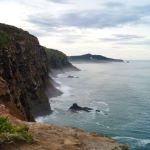 23/10/2024. Tomahawk, Soldiers’ Memorial, Karetai Track. Grade 4. Trampers. Leaders: Di Bezett, Gail Williams and Lyn Keene
24 people set off on a very humid day, straight up the 4wheeldrive track, the views were spectacular. Continue reading “Tomahawk, Soldiers’ Memorial, Karetai Track”
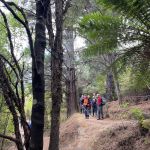 16/10/2024. Ravensbourne, Signal Hill, Big Easy. Grade 3. Trampers. Leader: John Gardiner.
At 1.05pm, 31 trampers arrived at the Signal Hill Lookout, a monument to the 1940 centennial of the signing of the Treaty of Waitangi
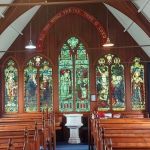 16/10/2024. Warrington, Seacliff. Grade 2. Hikers. Leaders: Maria MacNee, Julie MacKenzie..
23 hikers, travelling in 7 vehicles, converged in the car park at the picturesque St Barnabas church on the Coast Rd Warrington Continue reading “Warrington, Seacliff”
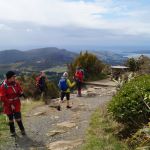 09/10/2024. Graham’s Bush to Mt Cargill. Grade 4. Trampers. Leaders: Karen McInnes and Gail Williams
Eleven hardy trampers met at the end of Hall Road in Sawyer’s Bay on Wednesday morning, very aware that the weather was dodgy to say the least.
Continue reading “Graham’s Bush, Organ Pipes, Buttar’s Peak, Mt Cargill”
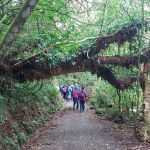 09/10/2024. Fraser’s Gully. Grade 2.5. Hikers. Leaders Helen Morris and Heather Reid.
18 hardy souls left the PJ carpark for Frasers Gully car park on a damp morning. No rain in town. Walked up so far and stopped for our morning tea on a corner. Then carried on up to the top at Dalziels Road. Continue reading “Fraser’s Gully”