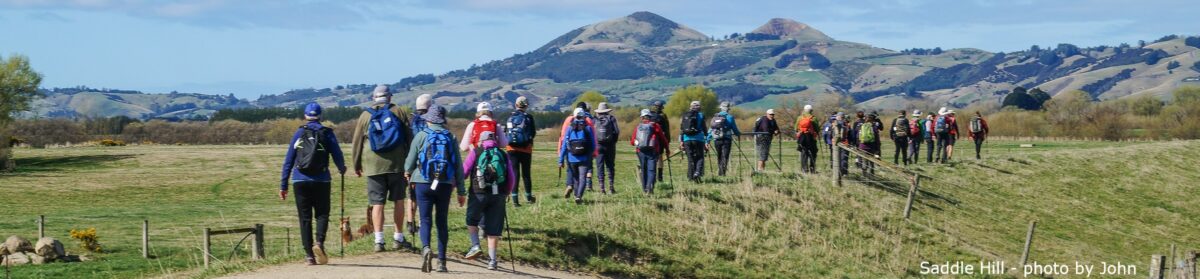
Prepared by Bruce Spittle (trip 28 January 2026)
Claredon Cemetery:
The Claredon cemetery was previously called the Waihola Gorge cemetery and the hill it is on top of has been called the “mound”. There are several unmarked graves but the names of several well known families from the area can be read on the remaining tombstones including Yorston, Young, Bell, Fryer, Sinclair, Sutherland, Craigie, Donald McMaster, Rev John McNicol and HB Flett.
Historic stable:
The stable was completed in 1884 with stone from the hill behind it, took two years to build and has 12 stalls. It was built for Henry Driver, 1831-1893, who was born in the USA, and came to Otago in 1861 from the Australian gold diggings as a youth after gold was found at Gabriels Gully. In 1881 Driver purchased the 2,000 acre homestead block of what was originally the 50.000 acre Run 52. He was a merchant and stock agent in Dunedin, was on the first City Council and the Provincial Council and was an MP for Roslyn. He was a prominent member of the Dunedin Jockey Club and responsible for laying out the race track at Forbury in 1877. Driver lived in an elegant house with a turret in Drivers Road, Dunedin. His farm was then called Horseshoe Bush and was run by a manager. The first horses stabled included thoroughbred hacks, cobs and carriage horses.
Limestone quarry:
Henry Driver opened a lime quarry on his property and in 1876 James McDonald purchased a part of Horseshoe Bush Estate for a lime works which in 1889 was taken over by the Milburn Lime and Cement Company. The company produced up to 80,000 tons of stone for cement and lime for agriculture. Milburn is locally known for its lime works with the Milburn Lime and Cement Works having been founded in 1888. The company ceased operations in 1967, The quarry is now operated by Milburn Lime.
Phosphate quarry:
In 1902 Ralph Ewing formed a company to quarry, burn and market as a fertiliser the phosphate rock on the hill behind the stable. By 1904 The Ewing Phosphate Company was regarded as one of the leading industries in NZ. A railway track about a mile long took the rock to the burning ground and then to the siding at Claredon where the brick building was built is 1918. At its peak, fifty tons a day of phosphate rock were railed to Dunedin. The mines were worked from 1902–1924 and from 1943–1955. About 200,000 tons were extracted. At 50 tons a day 200,000 tons would take 4,000 days to mine, about 11 years. However, the rock was actually mined for 36 years so production must have been lower at some stages. The business ended after competition occurred with cheaper phosphate from Nauru. There was a short revival in 2009 when Milton dairy farmers Tony and Sue McDonnell interested Ravensdown in mining the phosphate deposits at Clarendon and phosphate rock from the area was mixed with imported rock to make a product called Clarendon Gold. Ravensdown has also imported rock from Morocco, Vietnam, and Christmas Island. It recently announced plans to stop manufacturing superphosphate fertiliser at Ravensbourne and limit manufacture to Christchurch and Napier. Ravensbourne will remain a distribution centre. The 450 ha South Otago phosphate deposit is one of only two in NZ with the other being on the sea floor in the Chatham Rise. Mr McDonnell was reported in the Dairy Exporter Magazine as saying that apparently he and his neighbours had the only phosphate deposit in Australasia.
Fort Hill:
The Taieri River and its surrounding areas hold significant cultural and historical importance for the Māori people. The river was a crucial food-gathering area for coastal iwi, who would make seasonal trips inland to harvest wild foods such as birds, fish, and kouka (cabbage trees). The Taieri Plains, located in the upper reaches of the river, are known for their fertile farmland and have been a vital part of Māori farming practices for generations. The river’s unique land-forms and biodiversity make it a unique and important natural resource for the Māori community. Possibly Fort Hill was named because it had some significance to Maori. Murray Cullen, over whose land option 1 tramp, mentioned there was a rock cave nearby. On the recce the two aerials on the top of the hill were surrounded by pine trees and long grass with no obvious roads or caves being seen.